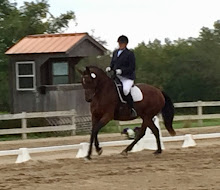
This last week a little horse on the farm found his Human. This guy arrived on the farm in 2008 severely underweight and untouched as an adult horse. He was always trying to interact with people right from the start. His journey of understanding humans started with a bucket of grain and a halter slipped over his head. He gradually learned how to be led and move away from pressure by following the grain. He seemed to like being brushed and fussed with. Basic ground manners took about one year to accomplish, I was not in a rush I had plenty of grass.
The next step was training under saddle. He took to this quite easily and was willing to listen to his young rider. I taught lessons to the pair along the way and Amore really picked up that there was a structure to this riding thing and that he should follow it. I was pretty happy with him and his willingness to try.
I rode Amore over this last winter and refined his knowledge of structure. He really did get comfortable with things and I taught a lesson on him in late winter. He did o.k. but worried about his rider a little bit. Amore liked a little more direction than he was getting.
I then introduced him to a rider who had been taking lessons and understood the basic dressage structure this last week. He immediately relaxed and enjoyed the lesson. It was not even the technical part of the lesson, he just really liked her and tried to do whatever he could for her.
It is the mental compatibility that was really the most impressive. I love it when that happens. I know many of us as riders have had our favorite horses to ride, but it is so neat when it happens. We all think it is because we finally understand how to ride better. When sometimes it is just the fact that the horse and rider really like each other and try harder for each other.
I hope you all have that special horse you are willing to go above and beyond for, because if you ride such a horse, he will go above and beyond for you too.
Have a great ride every day!
Tuesday, May 31, 2011

Tuesday, May 24, 2011
Loosening a Musclebound Horse
For me personally it is easier to stabilize a flexible horse than loosen a muscular horse. This past weekend I attended a Lientje Schueler Dressage clinic and took a muscular mare. This was very helpful to me in my overall understanding of loosening up the movement.
The fist thing I have to say is that the riders knee can be very helpful in this. The knee seems to be very effective at moving the shoulder. I have been using the knee to fine tune tempi changes on a flexible horse but not in basic movements. Now I wonder why I did not make this connection before.
The muscular horse is stuck in the shoulder more than I would have ever guessed. Loosening the shoulder was done with moving the horse off the knee in shoulder in and leg yielding very effectively. This helped the shoulders immensely. As did Renvers on the short side. The frequent repositioning of the shoulder helped the movement relax and develop.
The other obvious maneuver was transitions within the trot. They were more effective though after the lateral movements.
The half pass on this mare just felt tight all over. After the shoulder loosening, the half pass flowed more like you would expect it to flow.
The canter on the other hand was loosened more effectively with haunches in. I had also always asked a canter rhythm each stride. I changed my request to close my legs around the horse without a rhythm but to ask the horse to come up under me more. I did set a rhythm with my whip instead. Then allowed my mare to canter in good balance with quiet soft legs. I came in with both legs and the whip rhythm if she lost her balance. This allowed my legs to be quieter and allowed the mare to hear the directions more clearly. I am thinking clearer communication may be critical to advanced canter. I am going to try to change my canter approach for all of my horses so I can get better communication!
I have lots of things to think about but I am thinking I will see an improvement in my horses and I am super excited to play with these refined concepts.
The fist thing I have to say is that the riders knee can be very helpful in this. The knee seems to be very effective at moving the shoulder. I have been using the knee to fine tune tempi changes on a flexible horse but not in basic movements. Now I wonder why I did not make this connection before.
The muscular horse is stuck in the shoulder more than I would have ever guessed. Loosening the shoulder was done with moving the horse off the knee in shoulder in and leg yielding very effectively. This helped the shoulders immensely. As did Renvers on the short side. The frequent repositioning of the shoulder helped the movement relax and develop.
The other obvious maneuver was transitions within the trot. They were more effective though after the lateral movements.
The half pass on this mare just felt tight all over. After the shoulder loosening, the half pass flowed more like you would expect it to flow.
The canter on the other hand was loosened more effectively with haunches in. I had also always asked a canter rhythm each stride. I changed my request to close my legs around the horse without a rhythm but to ask the horse to come up under me more. I did set a rhythm with my whip instead. Then allowed my mare to canter in good balance with quiet soft legs. I came in with both legs and the whip rhythm if she lost her balance. This allowed my legs to be quieter and allowed the mare to hear the directions more clearly. I am thinking clearer communication may be critical to advanced canter. I am going to try to change my canter approach for all of my horses so I can get better communication!
I have lots of things to think about but I am thinking I will see an improvement in my horses and I am super excited to play with these refined concepts.
Sunday, May 1, 2011
Balance
When I think about balance I think about emotional balance, longitudinal balance and lateral balance. They are all very important and as riders we cannot forget any of them.
The earliest training starts out with emotional balance. It is very common for horse owners to play with their foals and maybe hold them until they relax and then pet them and release them. This is soft resistance but teaches the foal to calm itself and relax without having to break free and run off. When we ride them as adult horses - riding is soft resistance as well. The lessons the foal learns as a baby are invaluable to them as adult horses. We also teach our foals to lead, we place a rope arround their butt and ask with the halter but they learn to lead behind their mothers and then on their own. This is also soft resistance. We take the time to teach our foals to allow us to touch and pet them all over. We introduce them to picking up their feet and allowing us to pick them out and trim them. These are all very important lessons.
We maintain these lessons as the foal grows into an adult horse. As a young adult (3 years) we expand on the ground work and improve our communication with our horses. There are many folks who have written many books about their theories about ground work. There are many variations but the mechanical technique is not the most important it is the application of the groundwork that really makes the most difference to the horse. The basics the horse needs to understand on the ground is to move away from pressure, to move through tight spaces and be o.k. with it, to come forward and back away from you when asked. To be willing to explore toys or unknown objects and lean to calm themselves even if the object scares them. At this point we are ready to start the riding. The saddle and bridle are a part of the unknown objects. Getting used to girth pressure is also an unknow for the young horse that needs to be addressed.
At this point you are ready to ride your young horse. Riding is maybe a loose term. Placing pressure in the saddle and retreating may be all that is done on the first day. Gradually moving towards placing weight on the young horse is the direction you want to go in. Once the horse allows you to sit on it we then ask it to move forward. Forward may not look like what you are doing. Riders usually over bend the horses neck and ask it to move sideways off their leg. This disengages the horse and helps him understand he can move with the least amount of risk to the rider. I say this because in this way of traveling, the horse is least likely to be able to dislodge the rider. If the horse stays relaxed, he is then allowed to travel in a looser circle which looks more like riding forward. The earliest riding reminds the horse to move away from pressure. They have already learned this lesson on the ground. This is emotional balance in the earliest stages.
As the horse progresses, being fair to the horse maintains the emotional balance you have worked so hard to achieve. The horse gains confidence as we show them how to keep their balance longitudinally and laterally. Longitudinal and lateral balance become intertwinded with emotional balance from here on out.
Some horses are muscular but not so flexible, others are flexible but not strong. Once in a while you are lucky enough to have a horse that is both flexilbe and strong. A strong horse benefits from lateral movements like leg yeilding, shoulder-in, haunches in and half pass. A flexible horse benefits from up and down transitions. Transitions from the walk to the trot and the trot to the canter and the canter to the walk. The flexible horse also benefits from tansitions within the gait like working trot to legthening trot and back.
One of the most common mistakes I see is a young horse who has progressed from the beginning stages of riding to basic walk trot and canter. The rider is doing quite well and then the horse stresses a bit and either shies or tenses its back. The rider then immediately disengages the horse. The problem is that the disengagement is an aggressive manuver that takes the horse off balance. The disengagement that helps teach the beginning horse now scares the horse and takes him off balance. The young horse should be able to make a mistake and not be disengaged as a result. The young horse needs to trust the rider will help the balance, not panic and totally undo the balance. Longitudinal balance is needed if we as riders are going to ask our horses to walk trot and canter. The optimal bend for good longitudinal balance is a slight bend throuout the whole body including the neck when it is needed. This translates into no more than 1" of inside flexion in the neck. More than that and the rider looses the shoulder to the outside and compromises longitudinal balance.
All horses I train learn to spiral in and out on a circle as well as leg yeild. This helps make the horse easier to direct. For the muscular horse it loosens their muscles and begins to improve the gaits. For the flexible horse it helps them learn to coordinate their body parts and get them going in a unified direction.
Protect the willingness to move forward and sideways on the horse without resorting to disengagement and you will build confidence and trust through emotional, longitudinal and lateral balance.
Have a great ride every day!
The earliest training starts out with emotional balance. It is very common for horse owners to play with their foals and maybe hold them until they relax and then pet them and release them. This is soft resistance but teaches the foal to calm itself and relax without having to break free and run off. When we ride them as adult horses - riding is soft resistance as well. The lessons the foal learns as a baby are invaluable to them as adult horses. We also teach our foals to lead, we place a rope arround their butt and ask with the halter but they learn to lead behind their mothers and then on their own. This is also soft resistance. We take the time to teach our foals to allow us to touch and pet them all over. We introduce them to picking up their feet and allowing us to pick them out and trim them. These are all very important lessons.
We maintain these lessons as the foal grows into an adult horse. As a young adult (3 years) we expand on the ground work and improve our communication with our horses. There are many folks who have written many books about their theories about ground work. There are many variations but the mechanical technique is not the most important it is the application of the groundwork that really makes the most difference to the horse. The basics the horse needs to understand on the ground is to move away from pressure, to move through tight spaces and be o.k. with it, to come forward and back away from you when asked. To be willing to explore toys or unknown objects and lean to calm themselves even if the object scares them. At this point we are ready to start the riding. The saddle and bridle are a part of the unknown objects. Getting used to girth pressure is also an unknow for the young horse that needs to be addressed.
At this point you are ready to ride your young horse. Riding is maybe a loose term. Placing pressure in the saddle and retreating may be all that is done on the first day. Gradually moving towards placing weight on the young horse is the direction you want to go in. Once the horse allows you to sit on it we then ask it to move forward. Forward may not look like what you are doing. Riders usually over bend the horses neck and ask it to move sideways off their leg. This disengages the horse and helps him understand he can move with the least amount of risk to the rider. I say this because in this way of traveling, the horse is least likely to be able to dislodge the rider. If the horse stays relaxed, he is then allowed to travel in a looser circle which looks more like riding forward. The earliest riding reminds the horse to move away from pressure. They have already learned this lesson on the ground. This is emotional balance in the earliest stages.
As the horse progresses, being fair to the horse maintains the emotional balance you have worked so hard to achieve. The horse gains confidence as we show them how to keep their balance longitudinally and laterally. Longitudinal and lateral balance become intertwinded with emotional balance from here on out.
Some horses are muscular but not so flexible, others are flexible but not strong. Once in a while you are lucky enough to have a horse that is both flexilbe and strong. A strong horse benefits from lateral movements like leg yeilding, shoulder-in, haunches in and half pass. A flexible horse benefits from up and down transitions. Transitions from the walk to the trot and the trot to the canter and the canter to the walk. The flexible horse also benefits from tansitions within the gait like working trot to legthening trot and back.
One of the most common mistakes I see is a young horse who has progressed from the beginning stages of riding to basic walk trot and canter. The rider is doing quite well and then the horse stresses a bit and either shies or tenses its back. The rider then immediately disengages the horse. The problem is that the disengagement is an aggressive manuver that takes the horse off balance. The disengagement that helps teach the beginning horse now scares the horse and takes him off balance. The young horse should be able to make a mistake and not be disengaged as a result. The young horse needs to trust the rider will help the balance, not panic and totally undo the balance. Longitudinal balance is needed if we as riders are going to ask our horses to walk trot and canter. The optimal bend for good longitudinal balance is a slight bend throuout the whole body including the neck when it is needed. This translates into no more than 1" of inside flexion in the neck. More than that and the rider looses the shoulder to the outside and compromises longitudinal balance.
All horses I train learn to spiral in and out on a circle as well as leg yeild. This helps make the horse easier to direct. For the muscular horse it loosens their muscles and begins to improve the gaits. For the flexible horse it helps them learn to coordinate their body parts and get them going in a unified direction.
Protect the willingness to move forward and sideways on the horse without resorting to disengagement and you will build confidence and trust through emotional, longitudinal and lateral balance.
Have a great ride every day!
Thursday, April 14, 2011
Canter Influence
Infuencing the walk and trot is fairly straight forward. Influencing the canter is another matter. The canter can be influenced the most at the point of engagement.
First and formost is finding the point of engagement. When the horse canters he starts out with his outside hind leg followed by the diagonal pair of the inside hind and outside front and finishing with the inside front leg. At the point where the inside front leg hits the ground the rider will find their hips in the forward position. This is the point of engagement or where most of the influence happens in the canter. It is at this point where the rider must apply leg to ask for another canter stride and can apply a half halt in the rein for collection.
First lets talk about longitudinal influence. It is common for a horse to either canter too quickly or too slowly, most of them do not land just right in the longitudinal balance. Count your lucky stars if they do!
A horse that canters too quickly could use help with balance. To help a horse balance and slow down its canter, the rider should resist with the muscles in their torso and lower back during the time the horse is swinging them forward and then half halt in the reins when their hips have been fully swung forward. Along with the half halt the rider applies lower leg to the horse to ask for another stride. The half halt and the leg happen at the same moment. Then when your hips are swinging back freely follow with your hips. This will help your horse slow down and balance better. Be very careful to only flex your horses neck slightly, if you overbend your horses neck, your horse will have trouble balancing longitudinally.
As your horse progresses and is later in his training expected to have a more uphill balance to his canter, you will want to modify your upper body support of his balance a little. For example, when your horse canters uphill, your hips will not swing back past your shoulders, they will swing from the vertical line forward. You can help your horse further collect by only allowing your hips to swing as far back as your shoulders. So your torso swings forward and upward to help your horse stay collected. It feels like you are doing situps but the horse is the part that comes forward and up in his canter.
For a horse that is too slow or sticky in its canter, the rider can push at the point of engagement and then swing their hips stronger than the horse swings them. The hip is in addition to the leg, not instead of it.
A few other points of interest is that when asking the horse to turn in the canter, the rider must ask at the point of engagement when the rider has its leg on for another stride. So when asking for a turn, the rider asks when his leg is on the horse. This is the most effective way to ask. Asking for a turn while confirming forward makes for a better turn.
When asking for a down transition, it is also best to ask at the point of engagement. If the rider asks at that moment the horse swings itself into its best balance as it comes down to the trot, walk or halt.
Happy riding!
First and formost is finding the point of engagement. When the horse canters he starts out with his outside hind leg followed by the diagonal pair of the inside hind and outside front and finishing with the inside front leg. At the point where the inside front leg hits the ground the rider will find their hips in the forward position. This is the point of engagement or where most of the influence happens in the canter. It is at this point where the rider must apply leg to ask for another canter stride and can apply a half halt in the rein for collection.
First lets talk about longitudinal influence. It is common for a horse to either canter too quickly or too slowly, most of them do not land just right in the longitudinal balance. Count your lucky stars if they do!
A horse that canters too quickly could use help with balance. To help a horse balance and slow down its canter, the rider should resist with the muscles in their torso and lower back during the time the horse is swinging them forward and then half halt in the reins when their hips have been fully swung forward. Along with the half halt the rider applies lower leg to the horse to ask for another stride. The half halt and the leg happen at the same moment. Then when your hips are swinging back freely follow with your hips. This will help your horse slow down and balance better. Be very careful to only flex your horses neck slightly, if you overbend your horses neck, your horse will have trouble balancing longitudinally.
As your horse progresses and is later in his training expected to have a more uphill balance to his canter, you will want to modify your upper body support of his balance a little. For example, when your horse canters uphill, your hips will not swing back past your shoulders, they will swing from the vertical line forward. You can help your horse further collect by only allowing your hips to swing as far back as your shoulders. So your torso swings forward and upward to help your horse stay collected. It feels like you are doing situps but the horse is the part that comes forward and up in his canter.
For a horse that is too slow or sticky in its canter, the rider can push at the point of engagement and then swing their hips stronger than the horse swings them. The hip is in addition to the leg, not instead of it.
A few other points of interest is that when asking the horse to turn in the canter, the rider must ask at the point of engagement when the rider has its leg on for another stride. So when asking for a turn, the rider asks when his leg is on the horse. This is the most effective way to ask. Asking for a turn while confirming forward makes for a better turn.
When asking for a down transition, it is also best to ask at the point of engagement. If the rider asks at that moment the horse swings itself into its best balance as it comes down to the trot, walk or halt.
Happy riding!
Tuesday, April 12, 2011
Let the Show Season Begin!
Every year about April in Wisconsin the final plans fall into place for which shows I want to go to for the season. I talk with students and coordinate schedules. But more importantly than scheduling the shows is deciding which level you want to show your horse.
Remember that you will be nervous at the horse show or your horse may get a little stressed at the show. Think about showing a level under where you are schooling at home. That way you can manage show nerves for you and your horse without pushing or overstressing.
With gas prices as high as they are, staying close to home does make everything more affordable.
The training changes too. We do not push for more as much as we push the horses to get really good at what they will have to show. Getting good at the level that is being shown is worth it in the long run. Even though it seems like the horse is not making progress, they really are. They are getting very comfortable and strong with the required balance. In dressage making a jump from one level to the next is alot about balance.
Have a great season everyone!
Remember that you will be nervous at the horse show or your horse may get a little stressed at the show. Think about showing a level under where you are schooling at home. That way you can manage show nerves for you and your horse without pushing or overstressing.
With gas prices as high as they are, staying close to home does make everything more affordable.
The training changes too. We do not push for more as much as we push the horses to get really good at what they will have to show. Getting good at the level that is being shown is worth it in the long run. Even though it seems like the horse is not making progress, they really are. They are getting very comfortable and strong with the required balance. In dressage making a jump from one level to the next is alot about balance.
Have a great season everyone!
Thursday, March 31, 2011
Lengthening or Extending the Trot
Lengthening or extending the trot is not just about sending your horse forward and hoping for the best. It is a combination of two things. The abitilty of the horse to hold his longitudinal balance and lengthen his strides at the same time. To start teaching your horse to lengthen his trot start by assigning a number to his prefered trot. For example, you could assign it a 5 and say o.k. this is his normal trot. Then work to create transitions within the trot. Try to ask with a half halt (downward transition that is not completed - but functions to improve the longitudinal balance) to have a slower more elevated trot. Then allow him to return to his prefered trot (number 5). You have already created a little range in his trot. The next step is to push him forward to lengthen his trot to a number 6 trot. This number 6 trot is a little longer without getting quicker. As a rider be very careful not to allow the tempo speed to increase. If the speed of the steps increase, then the lengthen is decreased. When the horse speeds up his trot he is dropping his energy lower to the ground in front and cannot lengthen. The 1/2 halt is what keeps the horse balanced in his back longitudinally. So in a nutshell, a lengthening is a blend between a down transition and an up transition. When you are posting slow down your posting and add leg at the same time. The slower posting helps the longitudinal balance and the extra leg asks for the lengthening. If your horse rushes and gets quick you need less leg and more emphasis on the slow posting. If you get no forward response you have to increase your leg. Remember at the beginning we are trying to create range 4 to 6. Later for an advanced horse he will Piaff at number 1 and be in full blown extension at number 10. When sitting the trot and asking for a lengthening you add leg and increase your stomach and lower back resistance. Blend these aids so you get longer strides without getting quicker strides. Spend the first week just working towards 4 to 6 and then try to take your horse to 3 - 7 the next week. By the time you have a range of 3 to 7 you will have some lengthening and some collection. You will be surprised. Also, if your horse has a vacation, gradually go back into the lengthenings to allow him to regain his strength and flexibility. Lengthening is a combination of strength and flexibility. He needs to be strong enough in his back and torso to hold his longitudinal balance while being flexible enough to lengthen his strides. Have a great ride every day! Karen
Wednesday, March 23, 2011
Clarity
Clarity in riding sounds simple but can really be a hard to achieve. Many people believe that they should use only one aid at a time. For example, just a rein aid or just a leg or just some support in the riders body. The truth is that most of the time riders blend their aids and are then way more clear to their horse.
This is a big deal in young horses or a horse that is confused for any reason. In a young horse the rider may ask the horse to move sideways off their leg and as a result the horse looses longitudinal balance and then rushes an gets on the forhand. The young horse scared him or herself. The horse then thinks that moving off the leg laterally is difficult and will be resistant to doing that movement. If your young horse has a tendency to rush when asked to move sideways, the best thing you can do to help him or her is to blend your aids.
A horse that rushes when moving sideways benefits if the rider uses his or her body to post slower than the horse wants to travel to help the horse maintain longitudinal balance while moving sideways. Longitudinal balance really does help the horse stay quiet and focused on his or her job. I am not suggesting that the rider always hold the horse up. I am suggesting the rider show the horse where to go and then move out of the way. The horse learns from the softness after the balance correction, not during the correction.
The other aid to blend while traveling sideways is the rein aid. If the rein restricts the shoulder too much the haunches of the horse will lead the sideways movement which will disturb the lateral balance. If the rider leads too much with the reins the horse will lead with his shoulders and not really engage in any sideways movement. The reins really have to be blended well with the legs to keep the horse aligned and evenly bent for basic lateral movement. Again the horse learns during the release of the aid that he or she did the right thing.
The combination of a supporting rider torso and rein aids help show the horse how to balance longitudinally. The combination of the leg and rein aids keep your horse evenly bent and aligned. Alignment and longitudinal balance are critical to the horse if he or she is going to develop confidence in their work. Take care of them both and your horse will relax into the work happily.
Blend your aids for clairity. Show your horse what you want and thank him or her often by softening your aids.
This is a big deal in young horses or a horse that is confused for any reason. In a young horse the rider may ask the horse to move sideways off their leg and as a result the horse looses longitudinal balance and then rushes an gets on the forhand. The young horse scared him or herself. The horse then thinks that moving off the leg laterally is difficult and will be resistant to doing that movement. If your young horse has a tendency to rush when asked to move sideways, the best thing you can do to help him or her is to blend your aids.
A horse that rushes when moving sideways benefits if the rider uses his or her body to post slower than the horse wants to travel to help the horse maintain longitudinal balance while moving sideways. Longitudinal balance really does help the horse stay quiet and focused on his or her job. I am not suggesting that the rider always hold the horse up. I am suggesting the rider show the horse where to go and then move out of the way. The horse learns from the softness after the balance correction, not during the correction.
The other aid to blend while traveling sideways is the rein aid. If the rein restricts the shoulder too much the haunches of the horse will lead the sideways movement which will disturb the lateral balance. If the rider leads too much with the reins the horse will lead with his shoulders and not really engage in any sideways movement. The reins really have to be blended well with the legs to keep the horse aligned and evenly bent for basic lateral movement. Again the horse learns during the release of the aid that he or she did the right thing.
The combination of a supporting rider torso and rein aids help show the horse how to balance longitudinally. The combination of the leg and rein aids keep your horse evenly bent and aligned. Alignment and longitudinal balance are critical to the horse if he or she is going to develop confidence in their work. Take care of them both and your horse will relax into the work happily.
Blend your aids for clairity. Show your horse what you want and thank him or her often by softening your aids.
Subscribe to:
Posts (Atom)